
Barking, Pulling, and Lunging on Walks? Real Help for Your Reactive Dog
Does your dog get restless in passing situations? Does the leash tighten, does your dog bark, or lunge toward approaching dogs? A reactive dog on leash is a common challenge, and there are effective, gentle solutions. In this blog post, we share the experiences of Oulu-based Titta Leppänen and her daily life with Yona and Noomi, and explain how the Train’N’Treat treat dispenser and the LAT (Look at That) method have helped in training a reactive dog.
Introducing the furry family

Yona, an almost 10-year-old Dutch Kooikerhondje, joined Titta’s family in 2016. Titta’s first dog was a Dachshund named Nipsu, who came into her life in 2006 and taught her a great deal about everyday life with a dog – including those classic first-time owner mistakes. After the Dachshund, life with her first spaniel initially felt very easy. The breed is soft-natured, eager to please, and cooperative. When Yona turned one, her confidence grew. In recent years, this has started to show as stronger reactions to her surroundings.
In 2022, Noomi – Yona’s daughter – joined the family. Now daily life revolves around two active dogs, with hobbies such as agility, rally obedience, and plenty of outdoor activities, especially at their cabin in Kuusamo.
When Passing Situations Become Challenging
In recent years, Yona’s behavior in passing situations has become more difficult. In the city, dogs appear on almost every walk. When walking two dogs while juggling leashes and poop bags, it can feel like you’re out of hands.
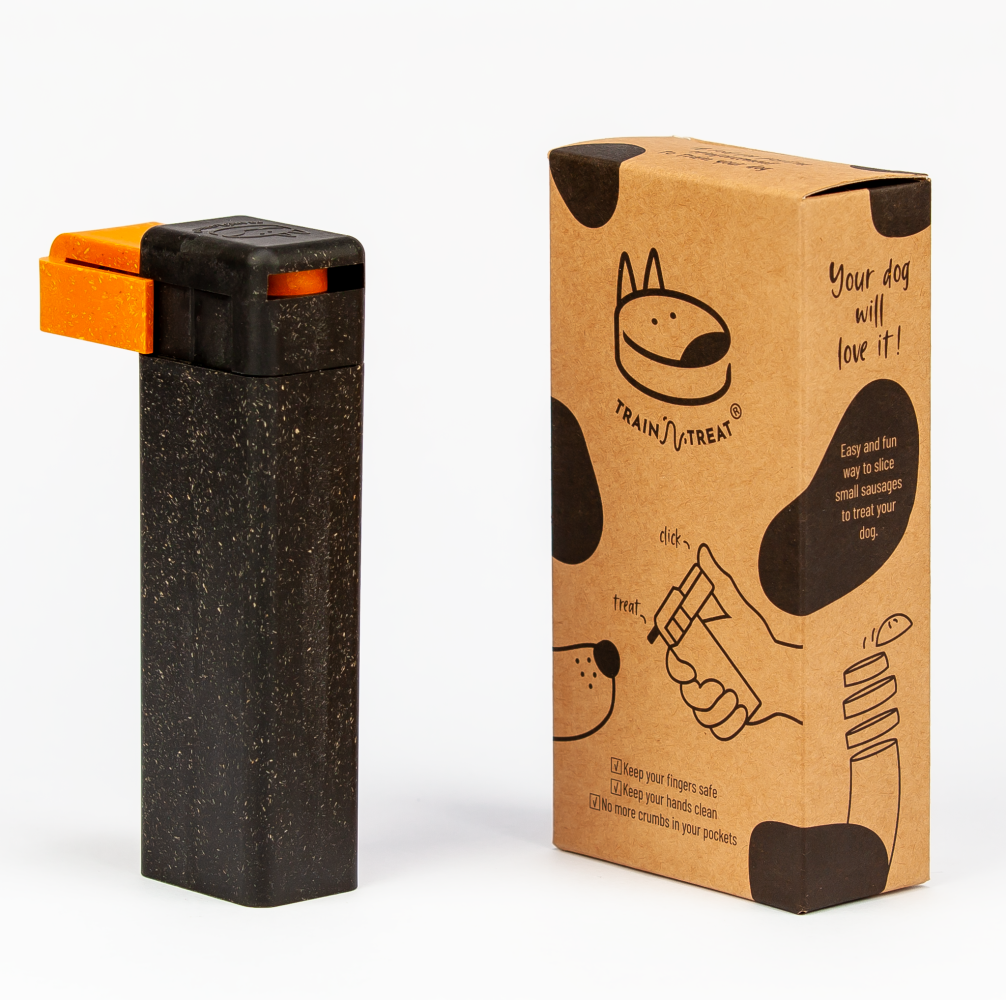
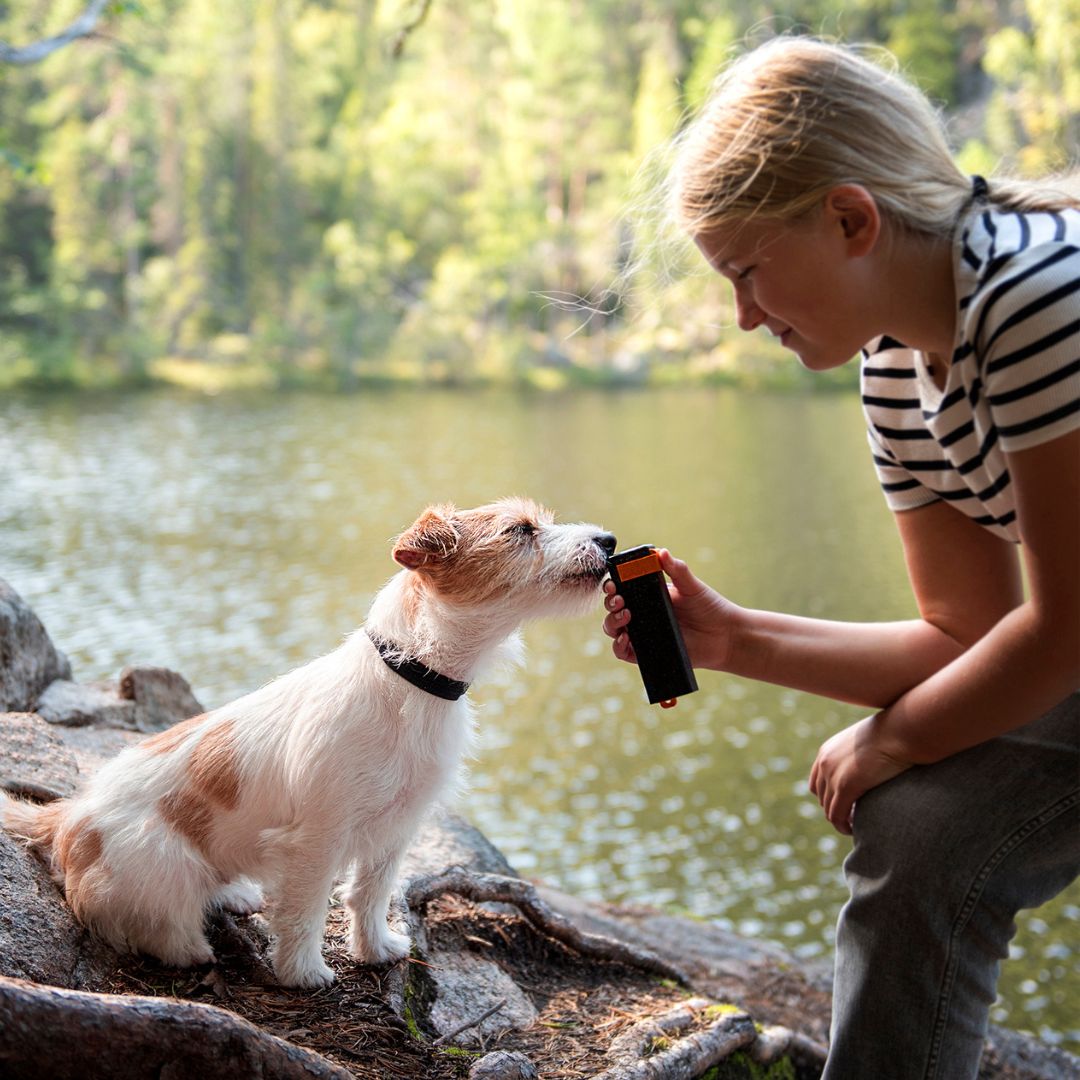
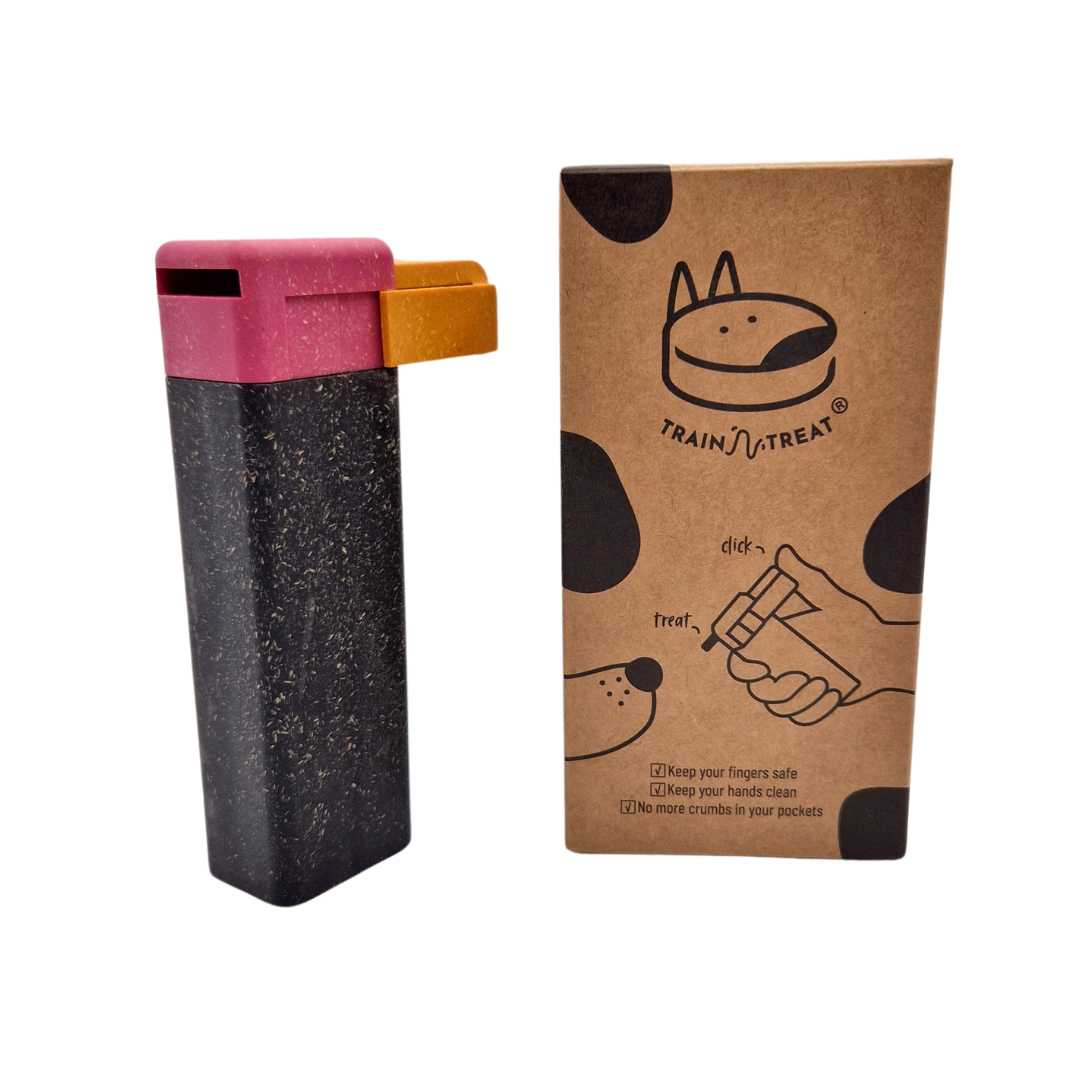
Titta became familiar with the LAT method after seeking help from a professional trainer for Yona’s reactivity. During training, she quickly realized that treats must be delivered immediately in the situation – which makes the Train’N’Treat device a superior tool for this method. There’s no time to dig treats out of a bag in your pocket. One key insight has been this: the more challenging the situation, the better the reward needs to be. Dry kibble simply won’t capture the dog’s attention.
Common Challenges with a Reactive Dog on Leash
- Staring and tensing up from a distance
- Tightening of the leash and pulling
- Barking or lunging
- Difficulty getting the dog’s attention back to the handler
LAT Method in Training a Reactive Dog
LAT stands for Look at That. The method was developed in the United States specifically for reactive and easily overstimulated dogs.
How Does LAT Work?
- The dog is allowed to look at the distraction (for example, another dog).
- As soon as the dog looks at the trigger calmly, it is rewarded.
- The dog learns to associate the distraction with something positive.
- Eventually, the dog automatically looks back at the handler after noticing the trigger.
This is about counterconditioning: the dog’s emotional response to the trigger changes.
Key Principles
- Start at a sufficient distance.
- Don’t push your dog into situations that are too difficult too quickly.
- Gradually decrease the distance as skills improve.
- Use highly motivating rewards (for example, soft and aromatic Train’N’Treat meat sausages work perfectly).
When the distance is appropriate, the dog can look at another dog without an explosive reaction.
Titta’s Practical Tips: Help for Walking a Reactive Dog
If you’re looking for help with leash walking a reactive dog, try these:
-
Learn to use the Train’N’Treat device in a safe, distraction-free environment.
Start indoors if that’s a calm and safe place for your dog. -
Manage distance.
Distance is your most important tool. If your dog can’t take a treat, the situation is too difficult. -
Reward at the right moment.
Reinforce immediately when your dog notices the trigger but hasn’t yet reacted strongly. -
Use a “super reward.”
Everyday treats aren’t enough in challenging passing situations. The tougher the distraction, the better the reward should be. -
Practice without pressure.
Plan training sessions in quiet areas before moving into busy city environments. -
Pay attention to your own emotional state.
Often, the leash tightens first on the human end. Stay calm. Calm breathing and anticipation help both of you.
Life with a Reactive Dog

Reactivity does not mean failure. It means your dog reacts strongly to their environment – often due to tension, insecurity, or excessive excitement.
Titta says Yona and Noomi are “like two peas in a pod.” The whole pack continues their hobbies actively: agility, rally obedience, and swimming in the summer. Alongside her dog-filled daily life, Titta is currently studying business and marketing at OSAO. She is completing an internship at Sidebay Oy, the company that manufactures Train’N’Treat devices, where she is learning content creation for social media channels.
Titta reached out to the company herself because she wanted to work with a business whose products and values – such as dog-friendliness, ecological thinking, and responsibility – she genuinely stands behind.
“I’ve personally received so much help from the Train’N’Treat device in our daily life that I want to be involved in telling other dog families about its benefits. It’s also important to me that the device assembly provides employment opportunities for people in mental health rehabilitation, and that the company operates responsibly in other ways as well.”
Can a Reactive Dog Change?
Yes – but more important than achieving a perfectly “silent pass” is a true emotional and behavioral change.
With the LAT method:
- The dog learns self-control
- Passing situations become more predictable
- Leash walks become more relaxed
- The owner’s stress decreases
Living with a reactive dog requires patience, but when training is done correctly, it significantly strengthens the bond between dog and owner.
Do You Need Help Training a Reactive Dog? Buy Train'N'Treat now!

If your dog reacts on leash to other dogs, people, or other triggers, you’re not alone. With the right methods – such as LAT training and the Train’N’Treat device – you can build a safer and calmer everyday life. Change begins with distance, the right reward, and consistent practice.