
Calming Exercises for Dogs in Different Situations – How to Help Your Dog Succeed in Everyday Life
A dog’s ability to calm down in different situations is one of the most important skills you can teach. Calmness is not an innate trait – it is a learned skill, just like loose‑leash walking, recall, or staying home alone.
Calming exercises help your dog:
- regulate their arousal level
- function better in distracting environments
- recover from stress
- focus during training
- behave appropriately in everyday situations
Why Are Calming Exercises So Important?
A dog’s nervous system works much like a human’s: if arousal rises too high, the dog cannot learn, listen, or behave as expected. Calming exercises build a sense of safety, which shows up in everyday life as better behavior and faster recovery.
A recent example of this is Nalle’s success, which was featured in the news. Nalle’s handler explained that the dog’s ability to calm down in challenging situations was one of the key factors behind the achievement – and Train’N’Treat supported the training by helping the dog stay focused while receiving quick, consistent rewards. This demonstrates how well‑structured rewarding and calmness go hand in hand.
Calming Exercises in Different Situations
1. Calming at Home – The Foundation of Everyday Life
Home exercises are the core of all calmness training. If a dog cannot relax in a familiar environment, it won’t be able to do so in more distracting situations.
Exercises for Home
- Mat training: the dog learns that a specific spot means rest.
- Chewable enrichment toys: help lower arousal.
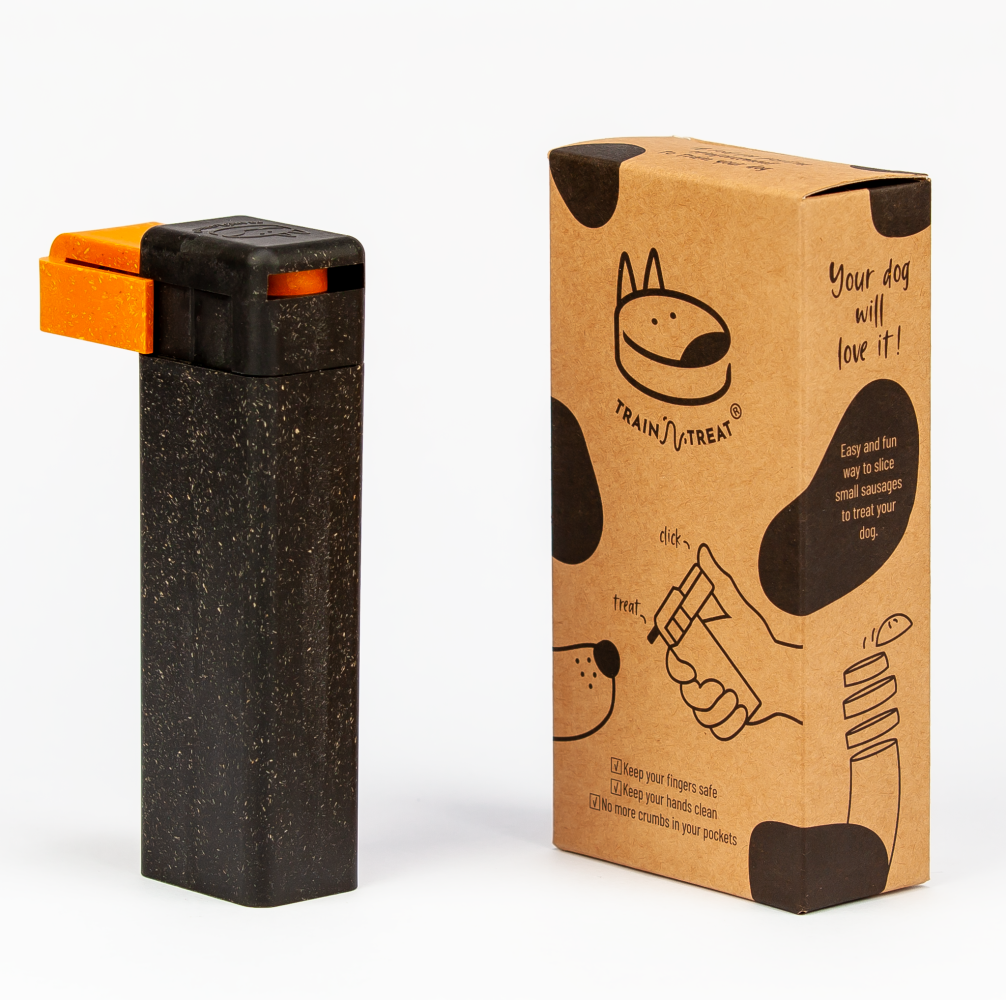
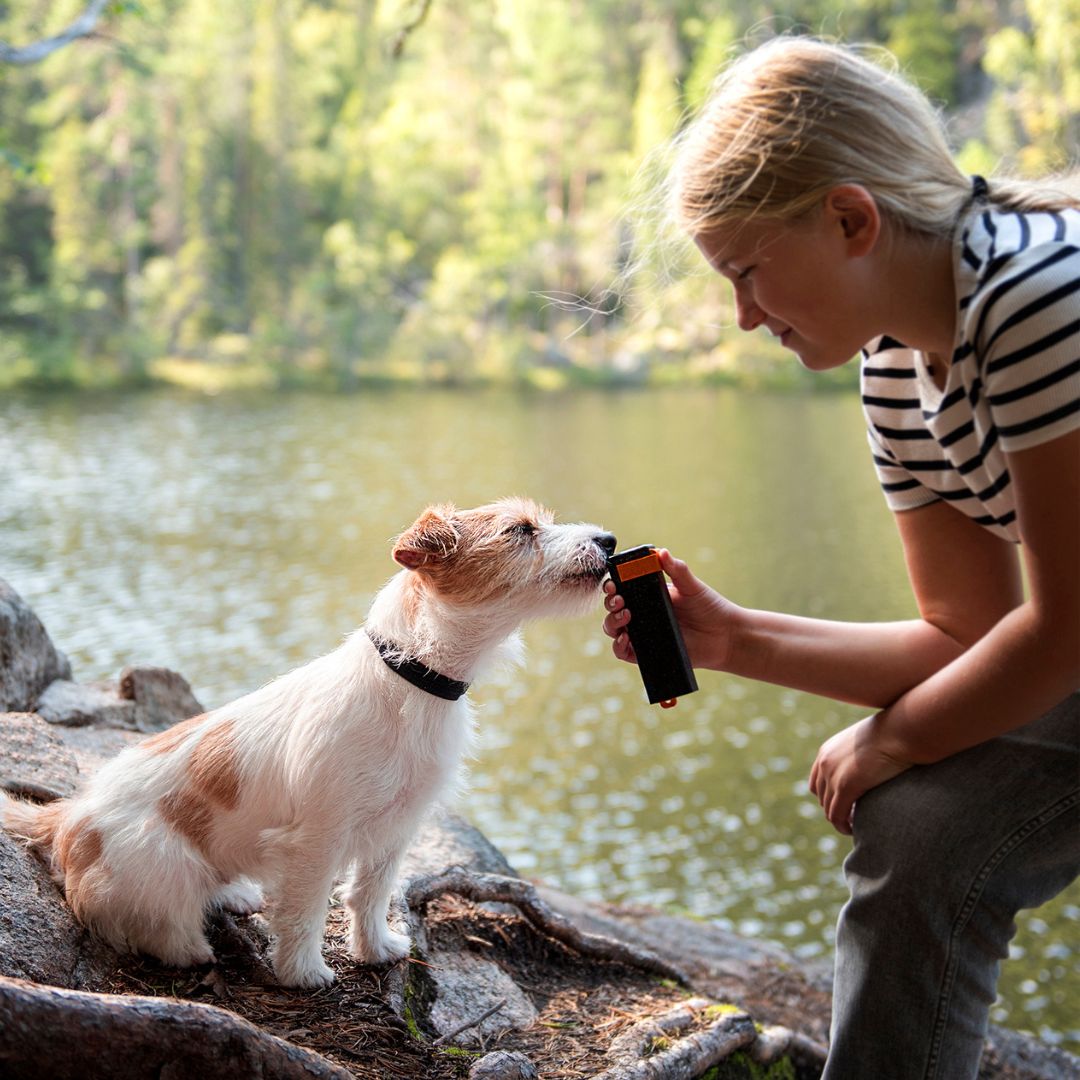
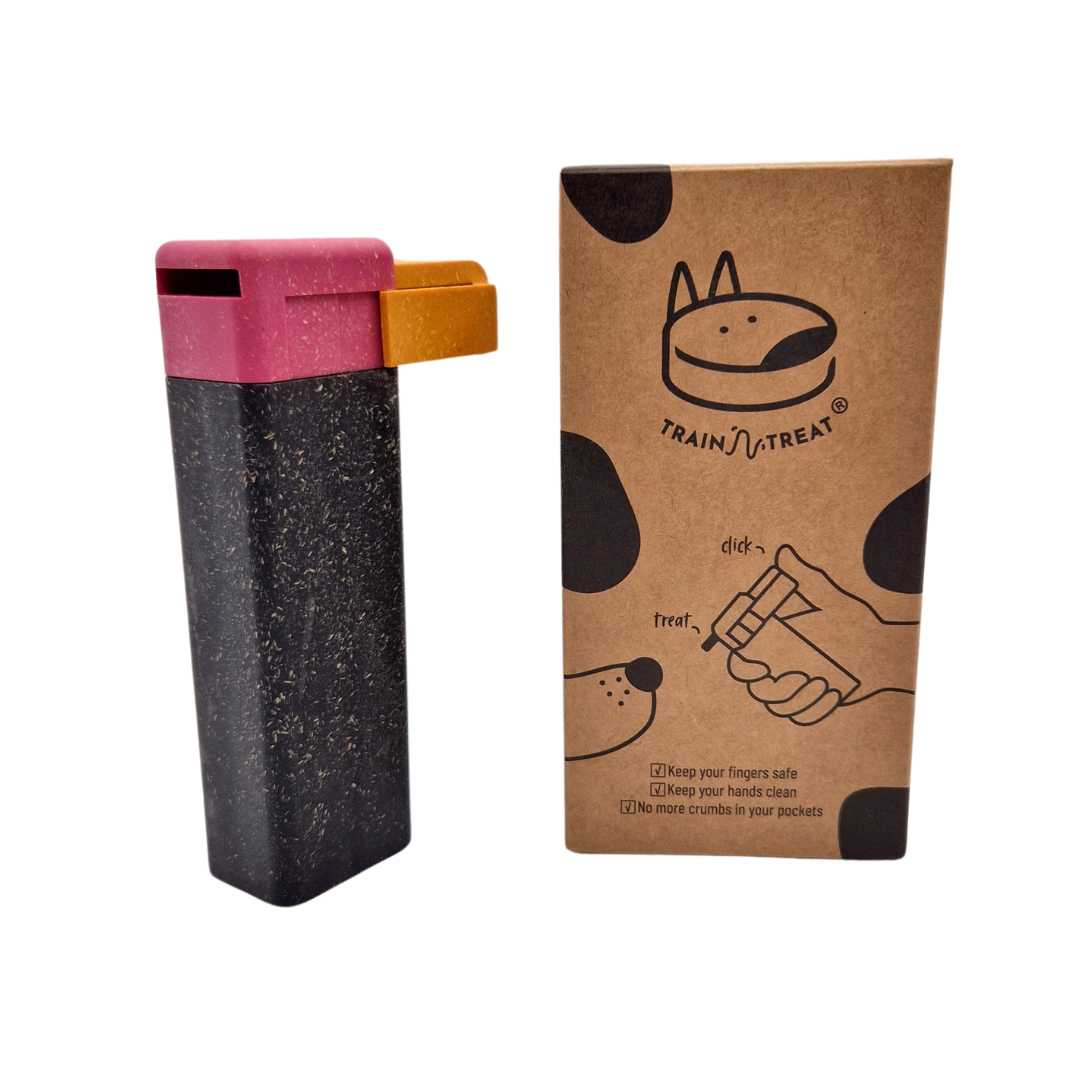
- Calm rewarding with Train’N’Treat: the dog receives a small, quick reward without getting overly excited.
- Breathing exercise with the handler: sit next to your dog and breathe slowly – your dog mirrors your rhythm.
When does the dog master this?
When it can relax even if small everyday distractions occur around it.
2. Calming During Nail Trimming – Safety First
Nail trimming is difficult for many dogs. Calming exercises help make it safe and stress‑free.
Exercises for Nail Trimming
- Touch desensitization: get the dog used to having its paws handled, one second at a time.
- Reward every success with Train’N’Treat – fast, clean, and precise.
- Breaks: if the dog tenses up, pause and let it breathe.
- Relaxed side position: teach the dog to lie calmly on its side.
Goal
The dog stays calm and trusts that the situation progresses at its pace.
3. Calming on Walks – In the Middle of Distractions
On walks, a dog’s arousal rises easily: scents, sounds, other dogs, and people all stimulate the nervous system.
- Exercises for Walks
- Stop and breathe: when the dog gets excited, stop and wait for relaxation.
- “Focus on me” exercise: reward the dog when it looks at you.
- Distraction training: start in easy environments and gradually move to busier ones.
- For reactive dogs: see the article Real Help for Your Reactive Dog.
Goal
The dog can recover quickly from excitement and continue the walk calmly.
4. Calming When Visiting Others – New Places, New Challenges
Unfamiliar places raise a dog’s arousal. Calming in someone else’s home is a skill that requires practice.
Exercises for Visits
- Bring a familiar mat: a known resting place provides security.
- Short sessions: don’t demand too much – let the dog explore calmly.
- Reward calm behavior: Train’N’Treat works well because rewards are quick and mess‑free.
- Calming cue: teach a word that means “now we rest.”
Goal
The dog can relax in a new environment without constant alertness.
5. Calming at Dog Shows – High Arousal, High Expectations
Dog shows are extremely stimulating: many dogs, people, noises, and long waiting times. Calming exercises are essential for the dog to perform well in the ring.
Exercises for Shows
- Practice waiting: teach the dog to rest in a crate or on a mat.
- Short focus exercises: reward quick, calm eye contact.
- Lower arousal before entering the ring: calm walking, no play.
- Rewarding in the ring: Train’N’Treat allows precise timing and calm reinforcement.
- For show dog's: read the article The Dog of The Year 2025 and Train'N'Treat
Goal
The dog can regulate its arousal and focus on the performance.
Summary: Calmness Is a Dog’s Most Important Skill
Calming exercises are not just a “nice extra” – they are the foundation of a dog’s wellbeing and training. When a dog learns to regulate its arousal, it:
- behaves better
- learns faster
- recovers from stress
- functions better in distractions
- enjoys everyday life more
And as Nalle’s story shows, well‑built calmness and rewarding can be decisive factors in a dog’s success – in everyday life or in hobbies.