
What My First Dog Taught Me – and What I Did Differently With My Second Puppy
Our first dog was chosen with our hearts. Our second with our heads. Years of living with two very different dogs have taught Outi Syrjälahti that the goal of life with a dog is not to raise a perfectly trained animal. What matters more is getting to know your own dog and teaching them the skills they need to fit into your everyday life.
When Train'N'Treat inventor and Sidebay Oy founder Outi Syrjälahti brought home her family's first dog, Epe, a Spanish Water Dog, the breed choice was based on very familiar reasons.
– We chose the breed largely with our hearts. I thought Spanish Water Dogs were good-looking, intelligent, a nice size and incredibly versatile. I thought we could do almost anything together.
And they did.
With Epe, the family tried agility, rally obedience, mushroom detection training, sheep herding and water rescue. Over the years, Epe taught the family an enormous amount about dogs – including things they decided to do differently with their next puppy.
Years later, when the family decided to get another dog, the process was very different.
This time, practicality came before appearance.
– We chose a Poodle for very practical reasons, even though I wasn't particularly attracted to the breed's appearance at first. We wanted a Medium Poodle, but Manu apparently had other plans and decided to stay Miniature. Well, size doesn't make the dog, Outi laughs.
Now Manu has been part of the family for about a year and a half.
– And of course, I now think he's the most wonderful dog in the world.

Getting Your First Dog? Find Out What's Difficult About the Breed Too
If Outi could make her first breed choice again, she would spend more time researching it.
Her most important advice for anyone considering their first dog is simple:
It's okay to choose to get a dog with your heart. But choose the breed with your head.
– We naturally tend to search for information that confirms why the breed we've fallen in love with would be perfect for us. Today, I'd almost do the opposite. I'd first find out what could be difficult about that breed.
In addition to talking to breed clubs and breeders, Outi recommends speaking with veterinarians and dog trainers.
Ask them directly about common health problems, challenging breed traits and what everyday life with the breed is really like.
How much exercise does the dog genuinely need? How strong are its breed-specific instincts? Is the breed prone to barking, guarding, hunting or strong reactions to its environment? How easy is it typically to motivate and train?
– Don't only ask what's wonderful about the breed. Ask what's difficult too. Then consider whether those characteristics also fit your life.

A Good Breeder Is Much More Than Someone Who Sells You a Puppy
Outi also recommends choosing the breeder carefully.
A good breeder understands the breed, knows the background of their puppies and is willing to talk openly about potential challenges.
– To me, a good breeder doesn't simply hand you a puppy and wish you luck. At their best, they continue to help you understand the breed, care for your puppy and deal with questions about training and everyday life even after the puppy has moved into your home.
That support can be particularly valuable for a first-time dog owner.
Everything is new, and sometimes you don't even know what questions you should be asking.
Epe Taught Us That We Don't Always Need to Feed a Dog's Endless Excitement
The family also made mistakes with their first dog.
One of them involved play.
Epe loved chasing balls, Frisbees and toys. Because he clearly loved the game, the family kept throwing them.
Too much, Outi now thinks.
– He would have kept playing fetch forever. Gradually, the ball became far too important to him.
At its worst, Epe would sit outside the storage room waiting for someone to get the ball. Sometimes his focus on it became so intense that even food and water didn't interest him normally.
With Manu, the family made a conscious decision to do things differently.
– We don't throw things for Manu. Instead, one of our favorite games is tug, where he gets to put all his strength into the game. And believe me, there's plenty of strength in there. That 5.5-kilo little man is surprisingly powerful.
Their first dog taught them that just because a dog desperately wants to do something doesn't necessarily mean it should be encouraged endlessly.
Recall Is One Thing We Decided to Do Differently
Another thing Outi would change with her first dog is recall training.
– We simply didn't practice recall enough with Epe. With Manu, we've corrected that mistake.
Outi considers reliable recall one of the most important skills a family dog can learn.
It's not simply about obedience.
A strong recall can give a dog more freedom and give the owner greater confidence.
– It's important to me that I can trust my dog. That's why recall should still be practiced even when your dog already knows it. Coming back to you should remain rewarding throughout your dog's life.
GUIDE: Reliable Recall – The Complete Guide to Teaching Your Dog to Come Every Time
With House Training, We Focused on Rewarding Success
Both dogs became house-trained quickly.
The family's approach was simple: take the puppy outside frequently, and when the puppy toileted in the right place, reward them with a treat.
The idea reflects how Outi approaches dog training today.
– I'm much more interested in teaching my dog what I want them to do than constantly telling them not to do the wrong things.
In the Syrjälahti family, good behavior is still rewarded every day with praise and treats.
Training isn't a separate activity that starts and stops at a particular time.
It happens in everyday life.
And Loose Leash Walking? There's Still Room for Improvement
After two dogs, you might expect every basic skill to be perfectly mastered.
Outi laughs at the idea.
– Loose leash walking has been a bit of a work in progress with both dogs.
The adults in the family also have different styles when walking the dogs.
– Sami keeps the dogs under closer control. I prefer giving them more freedom on a longer leash so they can stop and sniff.
Outi doesn't see an ordinary dog walk as simply exercise or a continuous obedience session.
– Dogs gather an enormous amount of information about the world through their noses. I think they should also be allowed to be dogs, sniff and explore.
Of course, controlled leash walking is still necessary when the environment requires it.
Once again, perfection matters less than teaching the dog how to function in the everyday life its family actually lives.
GUIDE: Loose Leash Walking – The Complete Guide to Teaching Your Dog walk nicely on a leash
Dogs Can Have a Different Relationship With Every Family Member
With both Epe and Manu, the family has noticed the same amusing pattern.
– Sami's word is law, and Outi's lap is the best place in the world.
Both dogs have also had their own special relationship with the family's daughter.
– It's been wonderful to watch the friendship between a child and a dog. Sometimes it feels as though children and dogs understand each other in a way adults don't always manage to.
A dog doesn't necessarily build the same relationship with every member of the family.
One person may be the favorite playmate, another the source of comfort, and a third the person whose instructions are followed most carefully.
All of those relationships can be important.
Breed Doesn't Tell You Everything About the Dog
Both Spanish Water Dogs and Poodles have histories connected with water and retrieving.
Epe and Manu apparently never read that part of their breed descriptions.
– Neither of our dogs has been particularly fond of water.
For Outi, it's a useful reminder that although choosing the right breed matters, breed alone can never tell you everything about an individual dog.
– Breed gives you a starting point. After that, you have to get to know the individual dog living with you.
When is your dog afraid?
What makes them excited?
When do they need your support?
When can you trust them?
What is the most valuable reward in the world to them?
– I think one of the most important responsibilities of a dog owner is learning to really know their own dog.
Dog Training Doesn't Have to Be About Winning Trophies
With Epe, the family tried many different dog sports and activities. Both dogs attended puppy classes, and the family invested time in socialization.
From the beginning, it was important that their dogs could confidently join them in different environments and learn to be comfortable around other dogs.
But the goal was never to create a competition dog.
– We don't train our dogs because we want to succeed in a sport where trophies are handed out. We train because we want to have fun together, build trust and feel confident that we can rely on our dogs in different situations.
Everyday rewarding was also what eventually inspired Train'N'Treat.
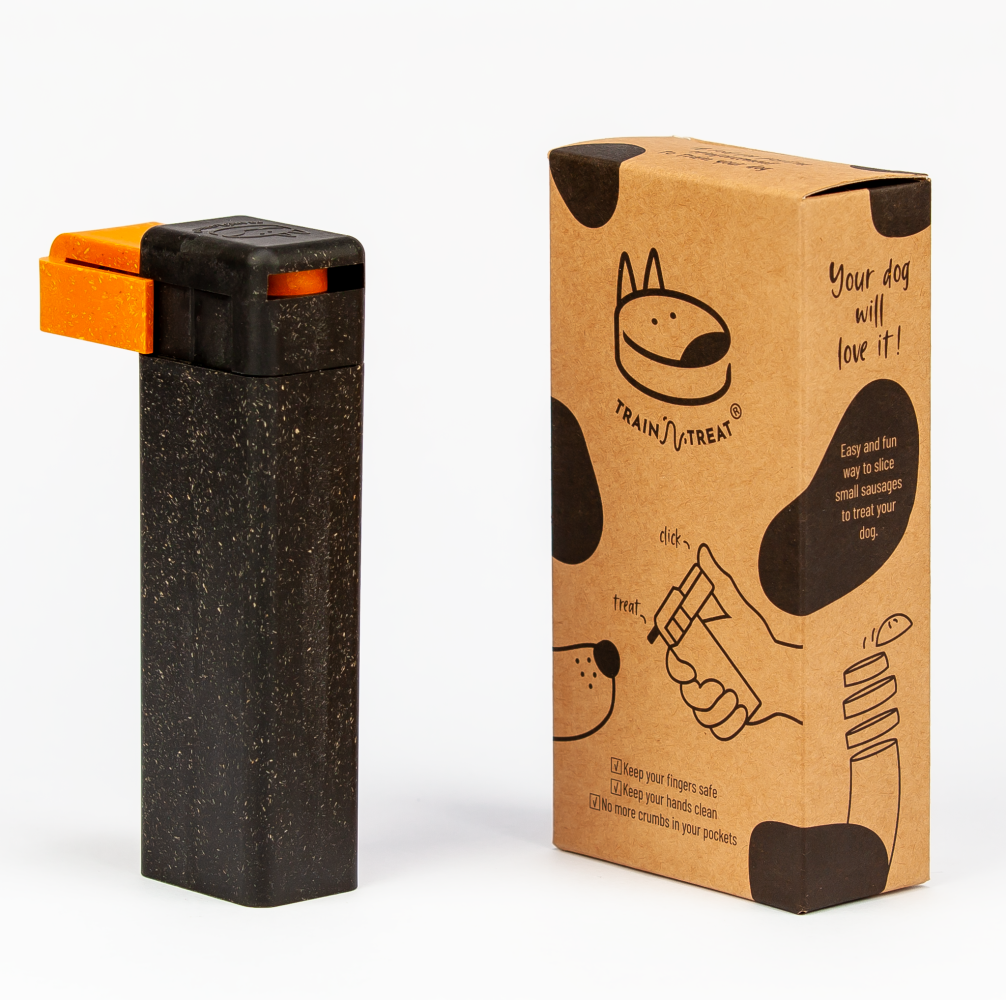
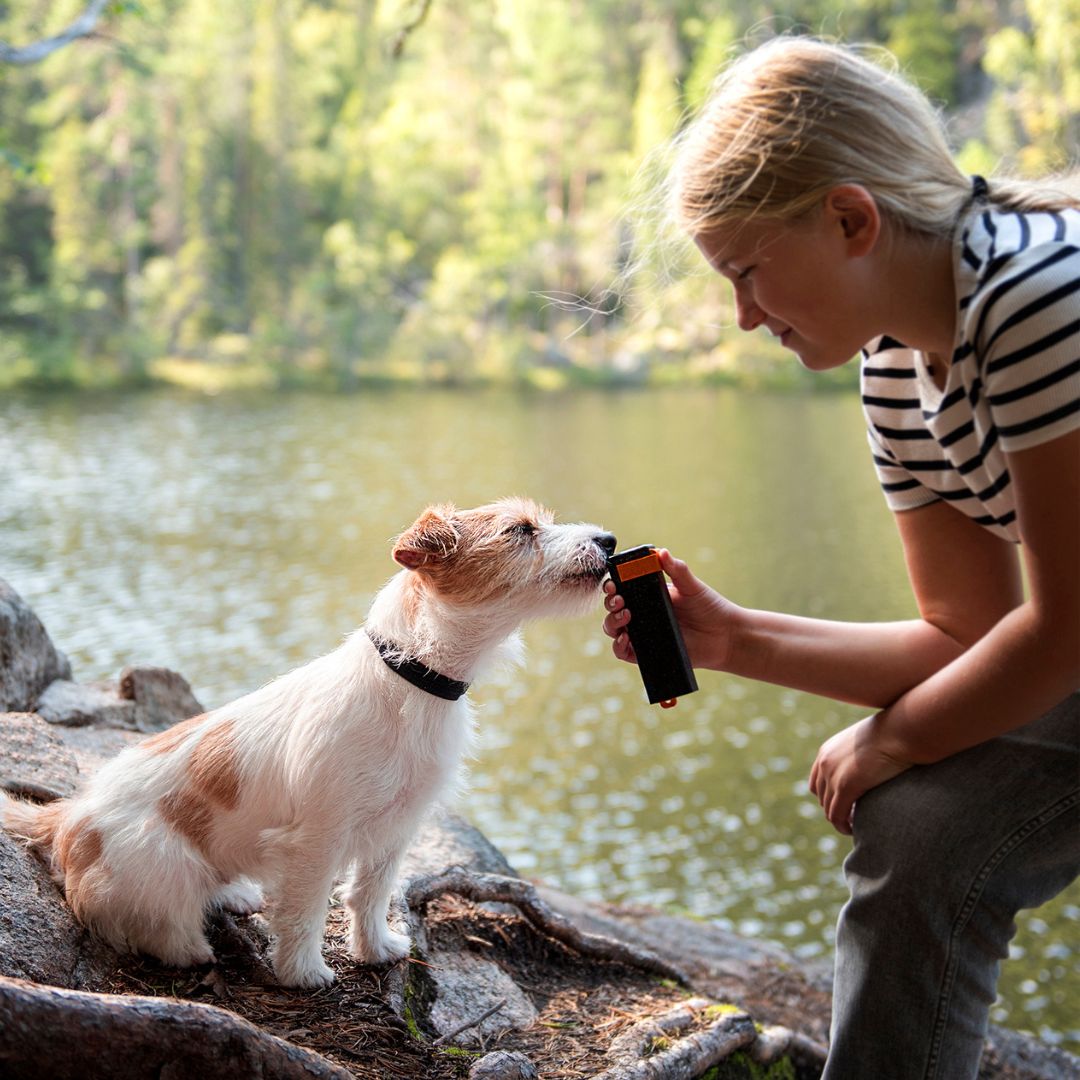
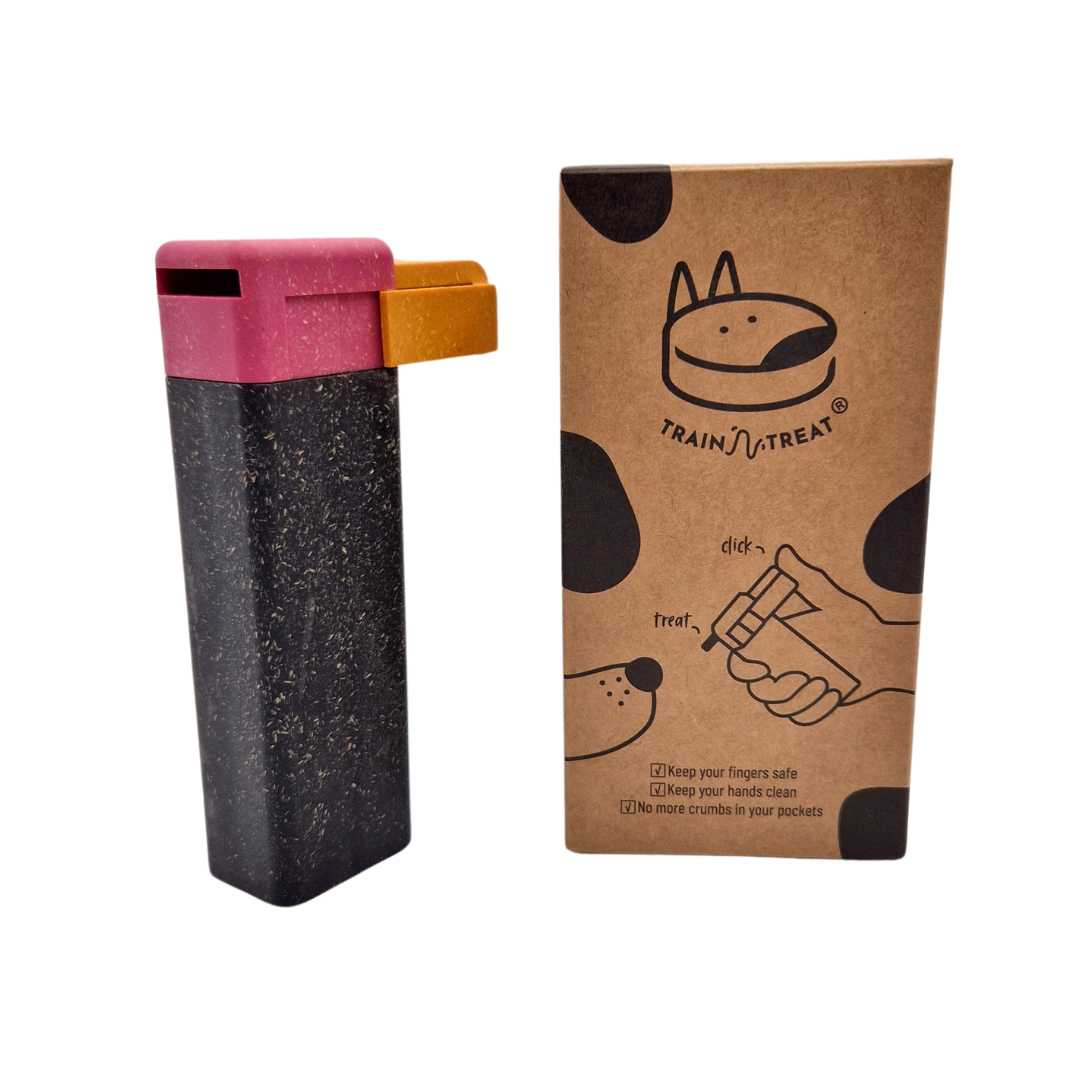
Outi wanted to make rewarding a dog faster and easier. When the dog does something right, the reward should be available at that moment – not several seconds later after you've finally found a treat at the bottom of your pocket.
– We praise and reward good behavior every day. Dog training is really made up of small moments throughout the day.
In the Forest, Nobody Has to Perform
Despite all the activities the family has tried, Outi's favorite thing to do with a dog is ultimately very simple.
Walking in the forest.
– I get exercise and fresh air. The dog gets to sniff, explore and, where it's safe and permitted, run freely. Nobody has to achieve anything.
Perhaps the forest best captures what Outi has learned about a good life with dogs.
A dog doesn't always need to be a project.
Sometimes you just need to live together.

Three Pieces of Advice for Anyone Considering Their First Dog
When Outi is asked what she would tell someone thinking about getting their first dog, the answer comes quickly.
1. Choose the breed with your head, not only your heart.
– Think first about the kind of everyday life you want to live for the next ten or fifteen years.
2. Spend time with your dog and learn who they are.
– Don't assume you know everything about your dog because you know their breed. Look at the individual in front of you.
3. Train your dog to fit your life.
– If you go boating, you'll need certain skills. If you live in a city, you'll need others. If you want your dog to run off leash in the forest, recall becomes especially important.
To Outi, a well-trained dog isn't the dog that knows the longest list of commands.
It's the dog you can enjoy everyday life with.
What If Your First Puppy Is Already Home?
Outi also has three pieces of advice for anyone currently raising their first puppy.
1. Let your puppy discover the world.
– Encourage them and give them confidence. Don't try to protect your puppy from everything unfamiliar. Instead, help them have safe, positive experiences with different people, places, sounds, surfaces and situations.
2. Relax and have fun together.
A puppy doesn't need to spend its first months constantly performing.
– Be the safe person your puppy can explore the world with. You don't have to be afraid of new things on your puppy's behalf.
And perhaps the most important advice:
3. Make yourself the most interesting thing in the world.
– Play with your dog. Praise them. Reward them. Do things together. Build a relationship in which your dog actually wants to listen to you.
The goal isn't a dog that works with you simply because it has no choice.
Something much more rewarding happens when, surrounded by all the interesting things in the world, your dog looks back at you and seems to think:
I wonder what my human is going to come up with next?
Puppy Training Guide – How to Train Your Puppy Step by Step
Your Second Dog Benefits From Everything Your First Dog Taught You

Epe taught the Syrjälahti family an enormous amount about dogs.
Manu has benefited from the things they did well with Epe – and perhaps even more from the things they got wrong the first time.
You don't have to know everything when you get your first dog.
What matters more is paying attention, learning and being willing to change what you do.
– If I had to choose just one thing I'd want every new dog owner to remember after my experiences with these two dogs, it would be this: don't try to raise the perfect dog.
Get to know the dog you have. Spend time together. Teach the skills you need for the life you want to share – and most importantly, remember to have fun together.