
In this guide
Add H2 headings to the page to create the table of contents.
What Makes a Good Dog?
Good dogs aren't born. Good behavior is reinforced.
Notice the good. Reward it. Repeat.
A good dog is calm, cooperative, confident and able to handle everyday life with its owner. Good dogs aren't born knowing how to behave – most of the skills we value can be taught through positive reinforcement, consistent training and everyday experiences.
A good dog isn't a perfect dog.
A good dog doesn't need to know dozens of commands, walk perfectly at your side or obey every request immediately.
For most of us, a good dog is simply a dog that is easy and enjoyable to live with.
A dog that can relax at home. Walk comfortably on a leash. Come when called. Wait when needed. Meet people and other dogs calmly. Stay home alone. And trust the people around them.
These are not personality traits a puppy either has or doesn't have.
They are skills that can be learned.
And that is good news for every dog owner.

What Are the Characteristics and Traits of a Good Dog?
When people describe a good dog, they often use words such as:
- calm
- friendly
- confident
- trustworthy
- cooperative
- adaptable
- attentive
- easy to handle
- comfortable around people and other dogs
Some of these characteristics are influenced by genetics, breed, early experiences and the individual dog's personality.
But much of what we consider good dog behavior can also be taught and strengthened through everyday life and training.
Instead of asking:
"Is my dog a good dog?"
A more useful question is:
"What skills does my dog need to live comfortably in our everyday life?"
Good Dog Traits vs. Good Dog Skills
Some qualities of a good dog come from genetics, breed, temperament and early experiences. Others are learned skills.
A naturally confident dog may find new environments easier, while another dog may need more support and training. Intelligence, sociability and independence also vary greatly between individual dogs.
That's why being a "good dog" shouldn't mean fitting one personality type. A quiet dog isn't automatically better than an energetic dog, and a highly social dog isn't necessarily better than an independent one.
What matters most is that your dog learns the skills needed to navigate everyday life safely and comfortably.
Personality makes your dog unique. Training gives your dog the skills to succeed.
10 Essential Skills of a Good Dog
You don't need to teach your dog everything at once.
Start with the skills that make everyday life safer, calmer and more enjoyable for both of you.
1. Coming When Called
A reliable recall is one of the most important skills you can teach your dog.
Your dog should learn that coming to you is always worthwhile – whether you are at home, in the garden or eventually somewhere with more distractions.
Start in easy environments and reward generously.
Never punish your dog for coming to you, even if it took longer than you hoped.
Coming to you should always be a good thing.
GUIDE: Reliable Recall – The Complete Guide to Teaching Your Dog to Come Every Time
2. Walking on a Loose Leash
A good dog doesn't need to walk perfectly beside your leg.
Dogs need to sniff, explore and experience their surroundings.
But learning to walk without constantly pulling makes walks much more enjoyable for everyone.
Reward your dog when the leash is loose and when they voluntarily pay attention to you.
Remember that a walk isn't only exercise.
For your dog,
sniffing is an important way of gathering information about the world.
GUIDE: Loose Leash Walking – The Complete Guide to Teaching Your Dog walk nicely on a leash
3. Being Able to Calm Down
One of the most overlooked dog training skills is doing nothing.
Dogs don't need constant entertainment.
A dog should gradually learn that sometimes:
Nothing happens – and that's completely fine.
Teach your dog to rest while you work, eat dinner, talk to someone or simply sit down.
Calmness is not necessarily something a dog is born with.
Calmness can be taught.
GUIDE: Dog Training Guide to Calmness, Rest and Self-Regulation
4. Waiting
Waiting is useful everywhere.
Before going through a door.
Before getting out of the car.
Before greeting someone.
Before receiving food.
Waiting teaches your dog impulse control and makes many everyday situations safer.
Start with very short moments and reward success.
5. Passing Other Dogs and People
Your dog doesn't need to greet everyone.
In fact, one of the most useful things a young dog can learn is that other dogs and people can simply pass by.
Reward your dog for staying calm, looking at you or continuing to walk.
The goal isn't to make your dog uninterested in the world.
The goal is to teach:
Not everything needs a reaction.
6. Being Comfortable With Handling
Every dog needs to be handled throughout their life.
Paws need checking. Nails need trimming. Ears and teeth need examining. Coats may need brushing, washing or trimming. Veterinary visits are unavoidable.
Teach handling gradually and pair it with positive experiences and rewards.
A dog that trusts human hands is easier and safer to care for.
7. Being Home Alone
Dogs are social animals, but most family dogs also need to spend some time alone.
Teach this gradually.
Start with very short absences and help your puppy learn that people leaving is a normal part of life – and that they always come back.
Don't wait until you suddenly need to leave your puppy alone for several hours.
8. Letting Things Go
Dogs explore the world with their mouths.
Instead of constantly taking things away, teach your dog that giving something up can lead to something even better.
Trade objects for food or another suitable item.
This builds trust and makes everyday situations much easier.
9. Paying Attention to You
You don't need your dog's attention every second.
But it is extremely useful when your dog learns that checking in with you is worthwhile.
Reward voluntary eye contact and moments when your dog chooses you over something happening in the environment.
These tiny interactions build cooperation.
10. Being Able to Learn
Perhaps the most important skill of all is learning how to learn.
A good dog doesn't need to know everything.
A dog that trusts you, enjoys working with you and understands that trying the right behavior leads to something pleasant can continue learning throughout life.
That is much more valuable than knowing a long list of commands.

Good Dogs Are Not Born Perfect
Puppies bite.
They pee on the floor.
They pull on the leash.
They get excited.
They steal socks.
They forget what they learned yesterday.
They may bark, jump, run away with your shoe or suddenly seem incapable of hearing their own name.
None of this automatically means you have a bad dog.
Your puppy is learning how the human world works.
Your job isn't to demand perfection.
Your job is to help your dog understand which behaviors work well in your shared life.
GUIDE: Puppy Training Guide – How to Train Your Puppy Step by Step
Reward the Behavior You Want to See Again
One of the simplest principles in dog training is also one of the most powerful:
Behavior that is rewarded is more likely to happen again.
Your dog walks beside you with a loose leash?
Reward.
Your puppy comes when called?
Reward.
Your dog sees another dog and stays calm?
Reward.
Your puppy lies down while you're drinking coffee?
Reward.
Your dog allows you to touch a paw?
Reward.
Many owners notice unwanted behavior immediately but forget to notice all the small moments when their dog is doing exactly the right thing.
Start looking for those moments.
They are happening all the time.
Timing Matters in Dog Training
 Dogs learn through associations.
If you want your dog to understand exactly which behavior earned the reward, the reward needs to follow the behavior quickly.
This is why good timing matters.
You don't want to start searching through pockets while the moment disappears.
Having rewards ready makes it easier to reinforce good behavior immediately.
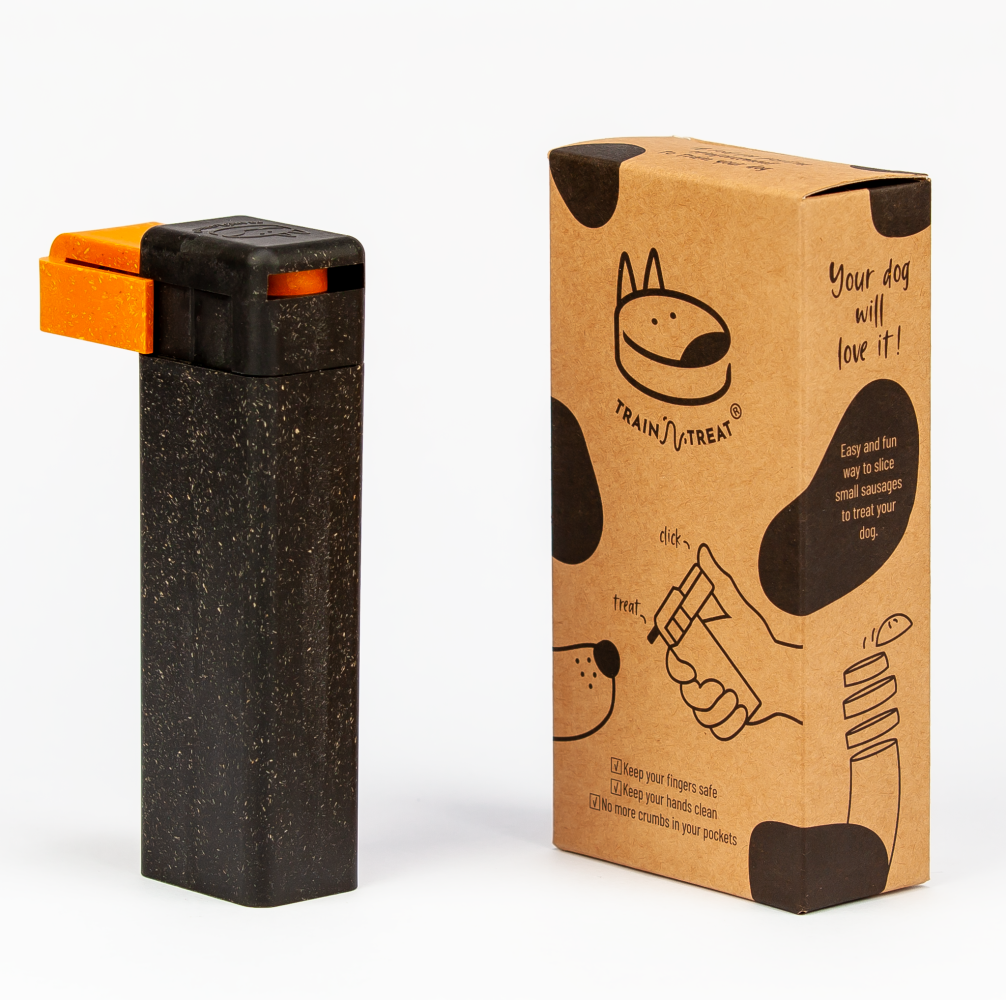
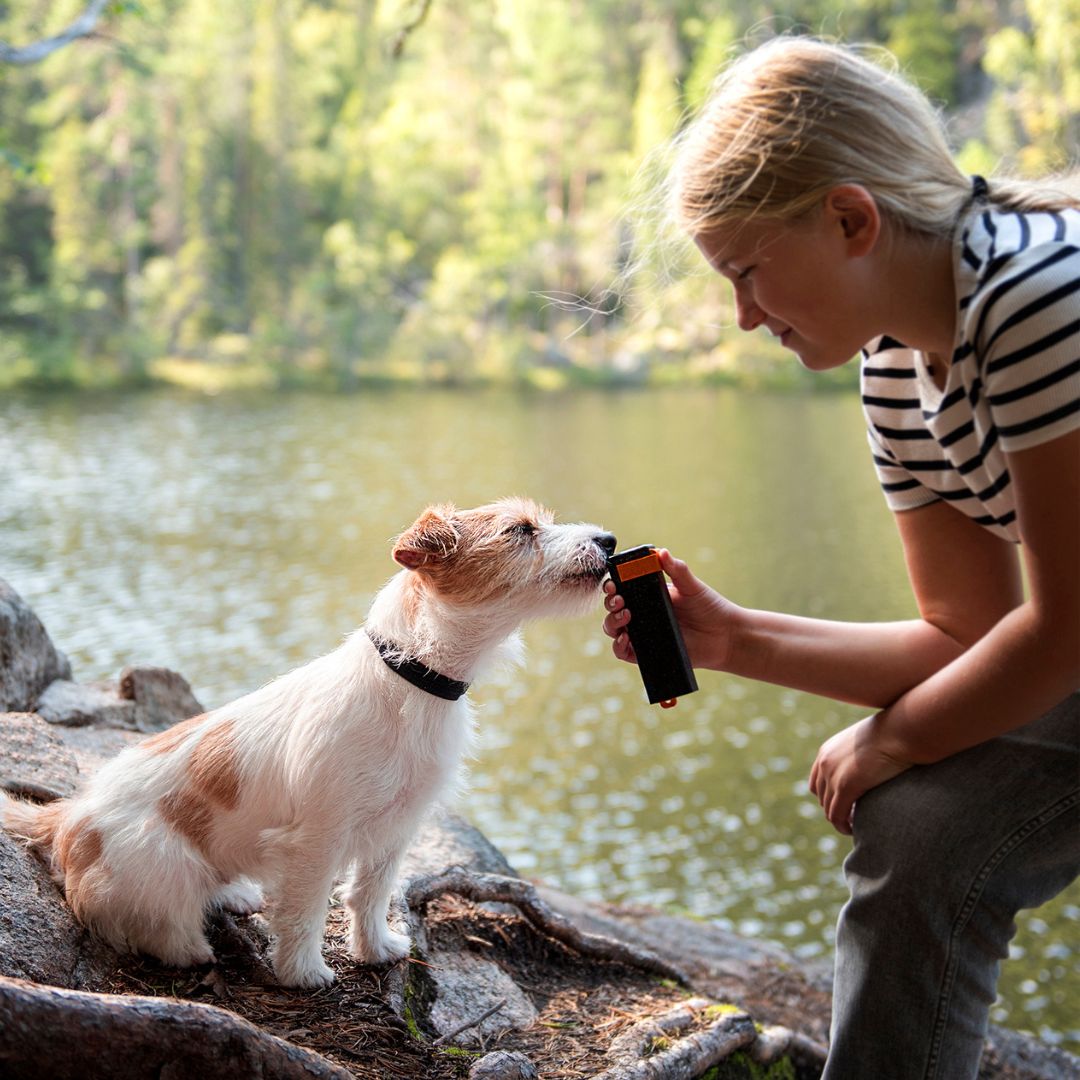
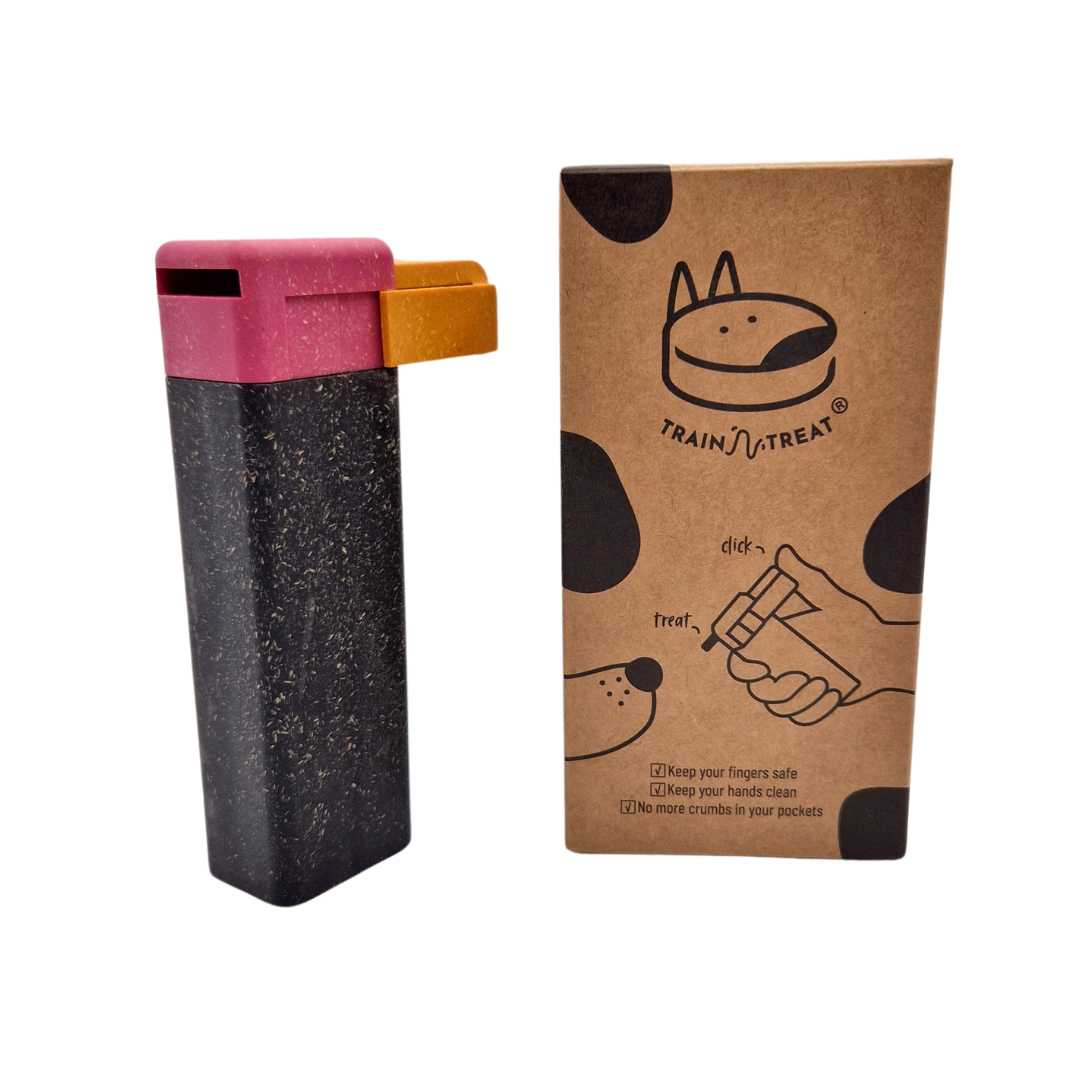
Train'N'Treat was designed for exactly this purpose: to make giving soft food rewards fast, easy, clean and safe during everyday dog training.
The tool isn't what trains your dog.
You do.
It simply helps you reward the right behavior at the right moment.
A Good Dog Also Needs to Be a Happy Dog
Good behavior is only one side of life with a dog.
Dogs also need opportunities to be dogs.
They need sleep.
Movement.
Sniffing.
Exploration.
Play.
Social interaction.
Safety.
Choice.
And time when nobody expects anything from them.
Training shouldn't remove normal dog behavior.
Good training helps dogs learn how to live successfully in our human world without forgetting that they are dogs.
A well-behaved dog isn't necessarily a happy dog.
Our goal should be both:
a dog that is enjoyable to live with – and a dog that enjoys its life.
You Don't Need a Perfect Dog
There will be difficult days.
Your dog will sometimes forget what they know.
Young dogs especially go through developmental stages when previously learned skills seem to disappear overnight.
That's normal.
Training isn't about creating a perfectly obedient dog.
It's about building communication, trust and skills little by little.
Five good minutes of training can be more valuable than one exhausting hour.
Notice the behavior you like.
Reward it.
Repeat.
And give your dog time to learn.
What Makes a Good Dog?
A good dog isn't defined by perfect obedience.
A good dog is a dog that has learned the skills needed for the life you share together.
For most family dogs, that means being able to:
- relax
- come when called
- walk comfortably on a leash
- wait
- handle everyday distractions
- be cared for and handled
- spend some time alone
- give things up
- communicate with their owner
- continue learning
You don't have to teach everything today.
Every small successful repetition builds tomorrow's good dog.
And perhaps the most important thing to remember is this:
There are no perfect dogs – and there don't need to be.
The goal is something much better:
A happy dog and a happy human who know how to live well together.






About Train'N'Treat
Blog posts
View all-

Getting a Puppy – How to Find a Responsible Bre...
Getting a puppy is a decision that can shape your everyday life for well over ten years. That is why you should never choose a puppy based only on looks,...
Getting a Puppy – How to Find a Responsible Bre...
Getting a puppy is a decision that can shape your everyday life for well over ten years. That is why you should never choose a puppy based only on looks,...
-

Puppy Training Guide: 10 Essential Skills Every...
Your puppy needs to learn where to go potty, how to walk on a leash, how to come when called, how to settle down and how to live in a...
Puppy Training Guide: 10 Essential Skills Every...
Your puppy needs to learn where to go potty, how to walk on a leash, how to come when called, how to settle down and how to live in a...
-

Don't Ask What to Teach Your Dog – Ask Why You ...
What should you teach your dog? Maybe that's the wrong question. Inspired by Simon Sinek's Golden Circle, we look at dog training through three questions: WHY you train, HOW you...
Don't Ask What to Teach Your Dog – Ask Why You ...
What should you teach your dog? Maybe that's the wrong question. Inspired by Simon Sinek's Golden Circle, we look at dog training through three questions: WHY you train, HOW you...


