
Study: Dogs Can Read Human Emotions from Our Faces – What Does This Mean for Dog Training?
A new brain-imaging study suggests that dogs can distinguish different human facial expressions. The findings are especially interesting because happy human faces appear to have a distinct representation in the canine brain. The research gives us another reason to think of dog training not simply as teaching commands, but as communication between two species.
When we train a dog, we may think that the dog is listening to our words and watching our gestures.
In reality, dogs are paying attention to much more.
A 2026 peer-reviewed study published in iScience, “Dog brain representations of human facial expressions: Encoding happiness and differentiating specific negative expressions,” investigated what happens in dogs' brains when they look at different human facial expressions.
The results are fascinating for dog owners – and especially for anyone interested in understanding how we can help our dogs become good dogs.
Dogs' brains respond differently to human facial expressions
Researchers used functional magnetic resonance imaging (fMRI) to study dogs while they were awake.
In the first experiment, eight dogs were shown images of human faces displaying either happy or neutral expressions. Happy faces produced stronger activation in the dogs' right temporal cortex, with activation extending into the caudate nucleus, a brain region associated with reward processing.
In a second experiment, 12 dogs were shown human faces expressing happiness, anger, fear or sadness.
Researchers also used machine-learning methods to analyse the dogs' brain activity.
The researchers were able to distinguish brain responses to happy faces from responses to negative facial expressions. Whole-brain analyses also revealed different activity patterns when dogs viewed certain negative expressions, including fearful versus angry faces and fearful versus sad faces.
According to the researchers, the results provide evidence that the canine brain can differentiate specific negative human facial expressions as well.
Your dog isn't only listening to what you say
This research is particularly interesting from a dog-training perspective because communication between dogs and humans involves much more than words and commands.
Your dog is watching you.
Dogs observe our faces, body language and movements. They listen to our voices. In everyday life, they also have access to information such as our scent and everything happening in the surrounding environment.
The researchers themselves point out that real-life emotional communication is much more complex than looking at static photographs of faces.
Dogs combine multiple signals when trying to understand us.
That is why it may be useful to think about dog training primarily as interaction and communication rather than simply obedience.
What makes a good dog?
At Train'N'Treat®, we have recently been thinking about a deceptively simple question:
What actually makes a good dog?
A good dog doesn't have to mean a perfectly obedient dog.
A good dog can simply be a dog with the skills needed to live comfortably in our human world.
A dog who can settle down.
Walk on a leash.
Come when called.
Wait.
Cope with everyday situations.
Accept handling.
And communicate and cooperate with their human.
A puppy doesn't arrive knowing these things.
Good dogs aren't simply born. Good dogs are taught.
And while the dog is learning, the human is learning too.
Dog training is not a one-way process in which a human gives a command and a dog performs it. It is communication between two individuals who gradually become better at understanding one another.
This new brain research makes that idea even more interesting: dogs really are paying attention to us, and their brains process emotional information conveyed by human faces.
Guide: Do this to train a good dog?
What if humans should enjoy dog training too?
Dog training advice understandably focuses heavily on the dog.
Is the reward valuable enough?
Is the exercise easy enough?
Are there too many distractions?
Is the dog motivated?
But there is another question worth asking:
Does the human enjoy training too?
If every training session means digging treats out of a pocket, sticky fingers, dropped food and struggling to deliver the reward at the right moment, training can gradually start feeling like a chore.
We believe training a good dog should be enjoyable for the human too.
When training is easy and enjoyable, owners have a reason to keep doing it. And when rewarding becomes simple, they can focus on what matters most – their dog and the moment they are sharing.
Train'N'Treat was created to make rewarding easier

Train'N'Treat® started with an ordinary dog owner's problem:
How can I reward my dog quickly and easily with soft, high-value treats without making rewarding itself difficult and messy?
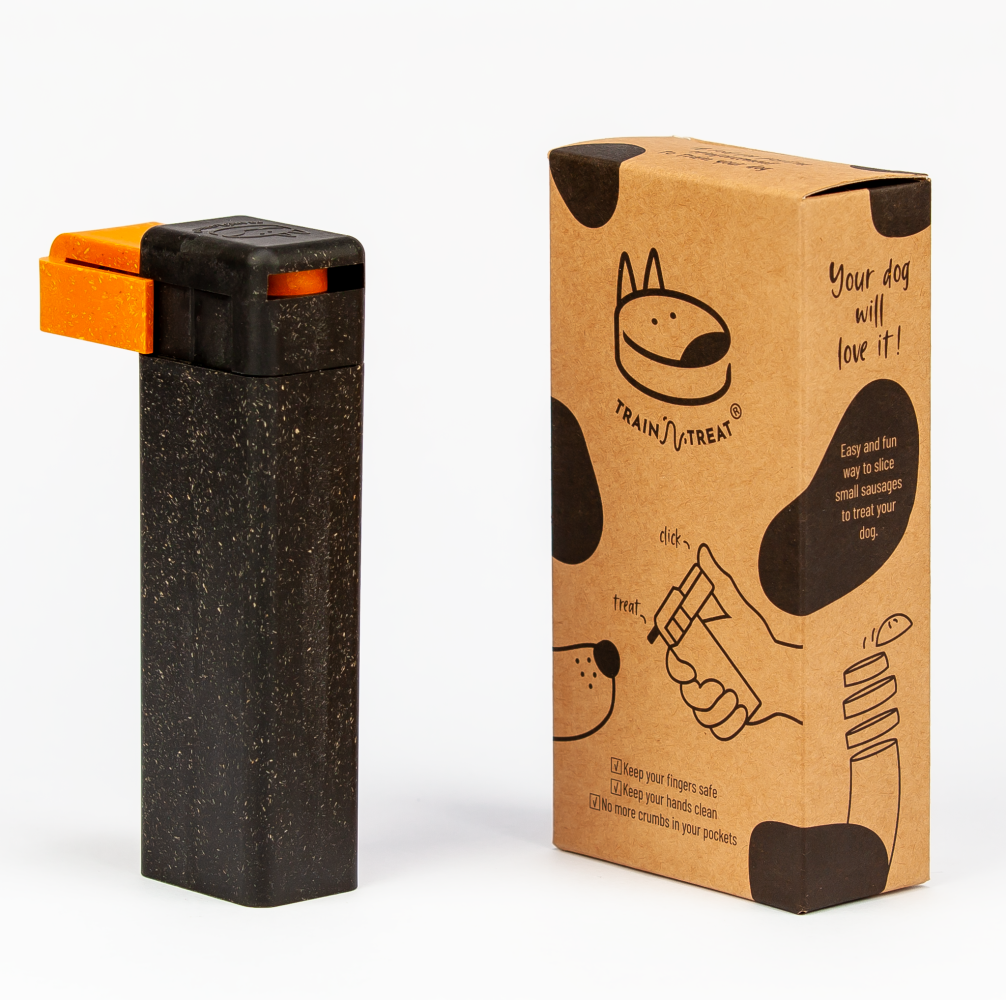
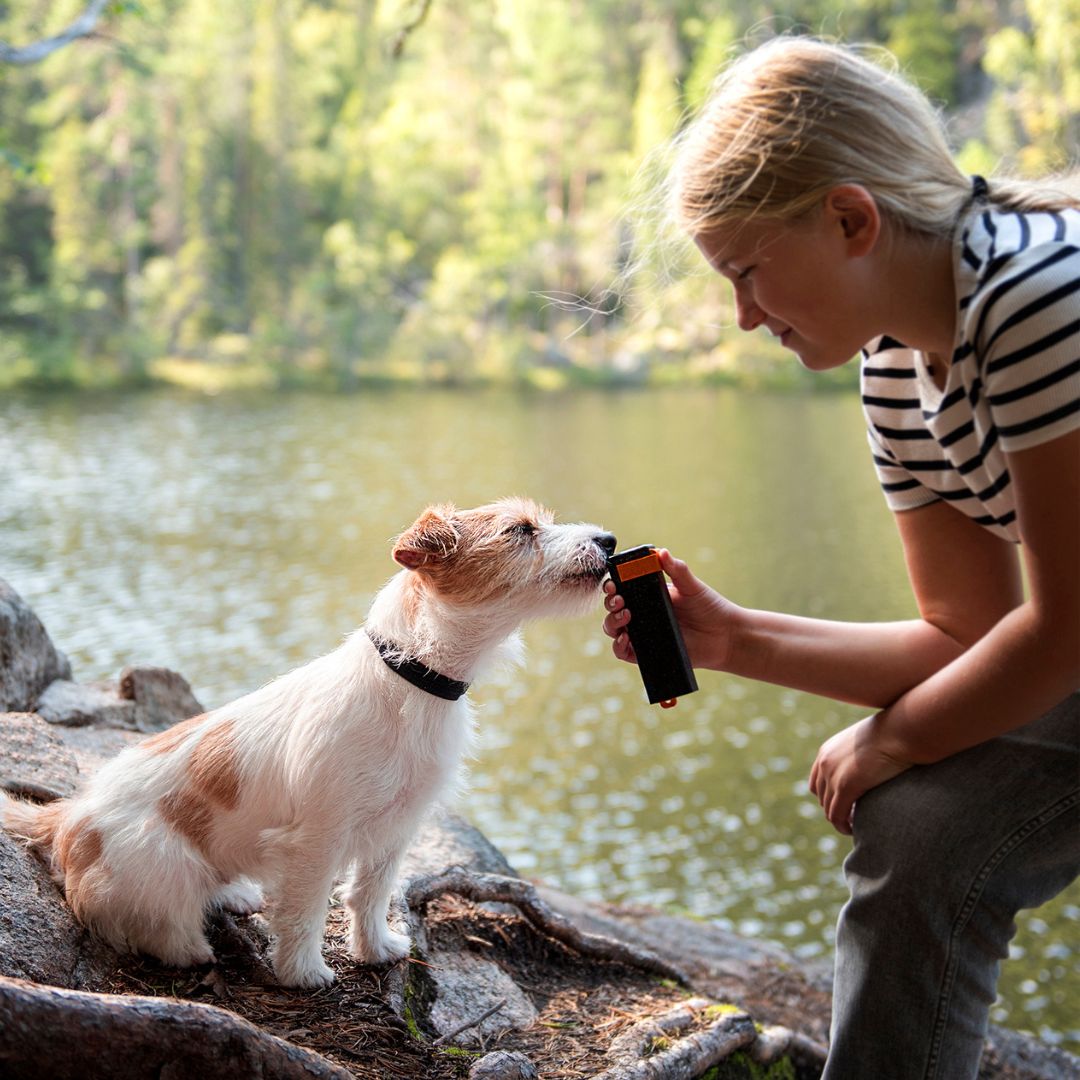
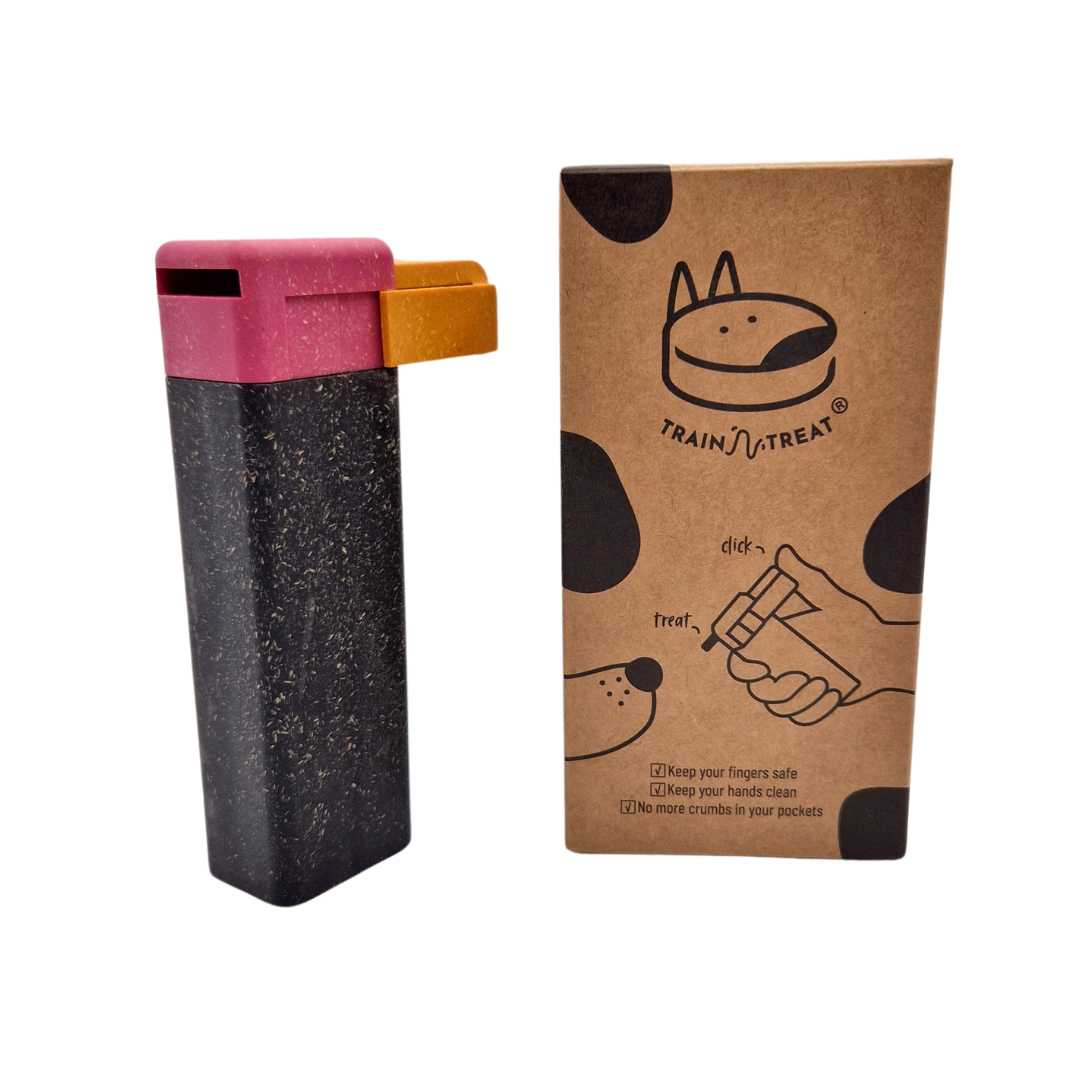
Train'N'Treat is a handheld dog-training reward tool designed for soft treats such as hot dog, cheese and other suitable soft foods. It allows the trainer to deliver small rewards quickly during training.
Train'N'Treat doesn't train your dog for you.
Instead, it makes one of the most important practical parts of reward-based dog training – delivering the reward – faster, easier, cleaner and safer.
The idea behind it is simple:
When the dog enjoys learning and the human enjoys training, there are more opportunities for successful moments together.
And those moments are how we build a good dog.
The research
Hernández-Pérez, R., Concha, L., Andics, A., Bernal-Gamboa, R. & Cuaya, L. V. (2026). Dog brain representations of human facial expressions: Encoding happiness and differentiating specific negative expressions. iScience.
DOI: 10.1016/j.isci.2026.116900
The research involved scientists affiliated with institutions including the University of Vienna, Eötvös Loránd University and the National Autonomous University of Mexico.
You can read the original research in iScience and additional information about the findings from the University of Vienna.
Make training easier for both of you
Want to make rewarding your dog faster and easier?
Discover Train'N'Treat® and make rewarding a simple part of your everyday training.
Whether you're teaching recall, loose-leash walking, calm behaviour or everyday manners, hundreds of small successful moments can eventually become something much bigger. A good dog.
Good dogs aren't simply born. They are taught – together.